










Represent the real storage structure before selecting origins and destinations in stock operations.
Before you start
- List each physical warehouse and its purpose.
- Choose stable codes and clear operational names.
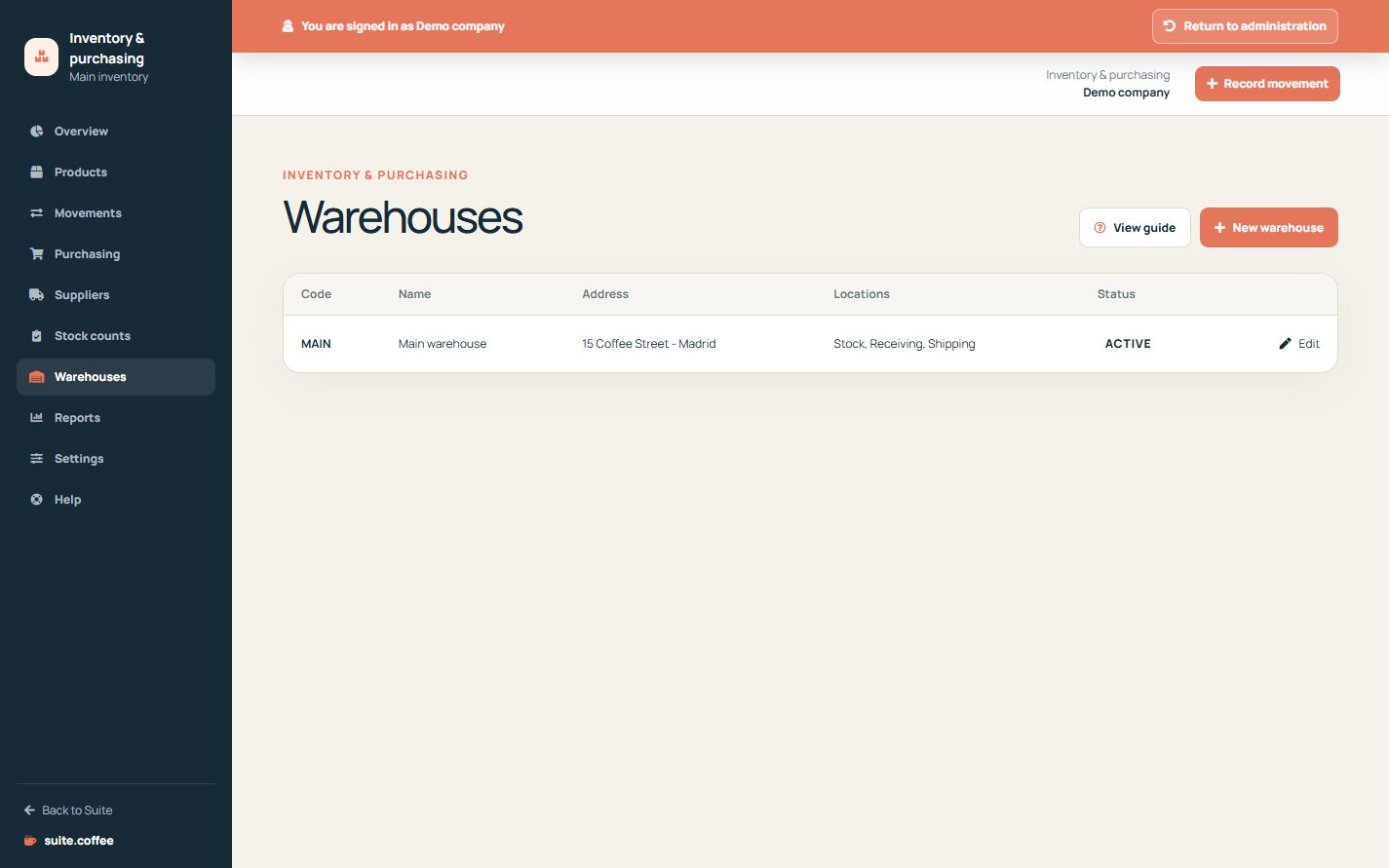
Model the physical structure
A warehouse groups its operational locations. Use clear codes and names so users choose the correct origin and destination in movements, receipts and counts.
Keep active locations usable
Only active locations are accepted in new stock operations. Deactivating a warehouse preserves its history and balances; it does not delete or relocate existing stock.
Understand capacity
The plan limit counts active warehouses. Locations structure each warehouse and stock remains separated by location.
Step by step
- Open Warehouses.
- Create a warehouse with code, name and address.
- Review its receiving, stock and shipping locations.
- Use those locations in receipts, transfers and counts.
- Deactivate only when no new operation should use it.
Final check
- Codes are unique and easy to recognise.
- Users can distinguish origin and destination.
- Deactivation preserves existing stock history.
Tip: Locations are operational positions; do not create duplicate warehouses merely to represent a shelf.